High blood pressure (hypertension)
When blood is pumped from the heart out into the body, what is called blood pressure arises. Low blood pressure is usually harmless and does not require any treatment, but when blood pressure is high it becomes harder for the heart to pump. Elevated blood pressure is not a disease, but a condition that entails an increased risk of, among other things, stroke, heart attack, heart failure, kidney disease, type 2 diabetes, dementia and reduced blood circulation in the legs.
Blood pressure is measured in millimetres of mercury, mmHg. The first number shows the systolic pressure and the second number shows the diastolic pressure. The systolic pressure is the pressure when the heart contracts to pump blood out into the arteries. The diastolic pressure is when the heart expands, i.e. the pressure in the arteries when the heart is in a “resting position” between heartbeats. The blood pressure of an adult, healthy person should be below 140/90 mmHg on average if it is measured in healthcare and below 135/85 mmHg if it is measured at home, but about one third of the adult population has elevated blood pressure above this level.
Symptoms
Many people with high blood pressure do not feel any symptoms; the only way to know for sure whether your blood pressure is too high is therefore to measure it.
Cause
There are several causes of high blood pressure, for example being overweight, stress, alcohol, genetics, kidney disease, pregnancy complications or side effects of medicines, for example the contraceptive pill. Blood pressure, and especially the systolic pressure, also increases with age.
Treatment
Changing your lifestyle can lower high blood pressure and thus reduce the risk of cardiovascular disease. Examples of what you can do to lower your blood pressure: drink less alcohol, lose weight if you weigh too much, exercise regularly, reduce stress, stop smoking, eat a varied diet with plenty of fruit and vegetables, eat less salt, avoid liquorice.
Sometimes it is not enough to change your lifestyle to lower your blood pressure and then drug treatment may be needed. The aim of the treatment is to reduce the risk of stroke, heart attack, heart failure and kidney disease. Usually two or more medicines are needed to lower blood pressure sufficiently.
Which arm should you measure your blood pressure in?
At the first measurement, blood pressure should always be measured in both arms. If the difference between the arms is less than 10 mmHg, the right arm should be used for subsequent checks. If blood pressure differs between the arms, i.e. a difference of 10 mmHg or more, blood pressure should thereafter always be measured in the arm with the higher blood pressure.
Source: 1177 and Vårdhandboken
Self-monitoring for hypertension
Remote patient monitoring is a good tool for high blood pressure because you can measure your blood pressure regularly, whenever it suits you, in a calm and safe environment. It also helps to detect and address high blood pressure values in time, which reduces the risk of complications such as heart attack and stroke.
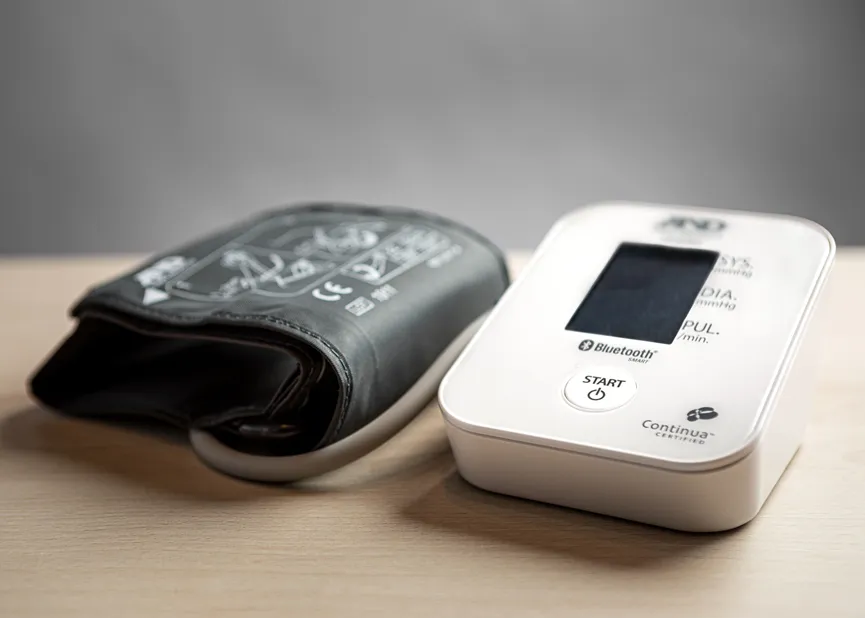
You will have access to a Bluetooth-connected blood pressure monitor that you pair with a mobile app. When you measure your blood pressure, the values are automatically entered into the app. There you can follow how your blood pressure has been over time through graphs and tables. If your blood pressure is abnormal, i.e. too high or too low in relation to the set threshold values, your healthcare provider receives a notification about this and can contact you regarding any measures.
Do you have high blood pressure? Check whether you can get access to remote patient monitoring here.