Type 2 diabetes
Insulin is a hormone needed for cells to be able to absorb sugar from the blood. Type 2 diabetes means that the body has difficulty keeping the sugar level in the blood sufficiently low, which can cause diseases due to complications in both large and small vessels. The most serious consequence of type 2 diabetes is that the arteries become clogged with fatty deposits more quickly, making it harder for the blood to pass through. This can lead to, among other things, heart attack and stroke. Complications in small blood vessels can, among other things, lead to damage to the retina of the eye, kidney damage and nerve damage that can cause reduced sensation in, for example, the feet and legs. Type 2 diabetes usually develops in adulthood.
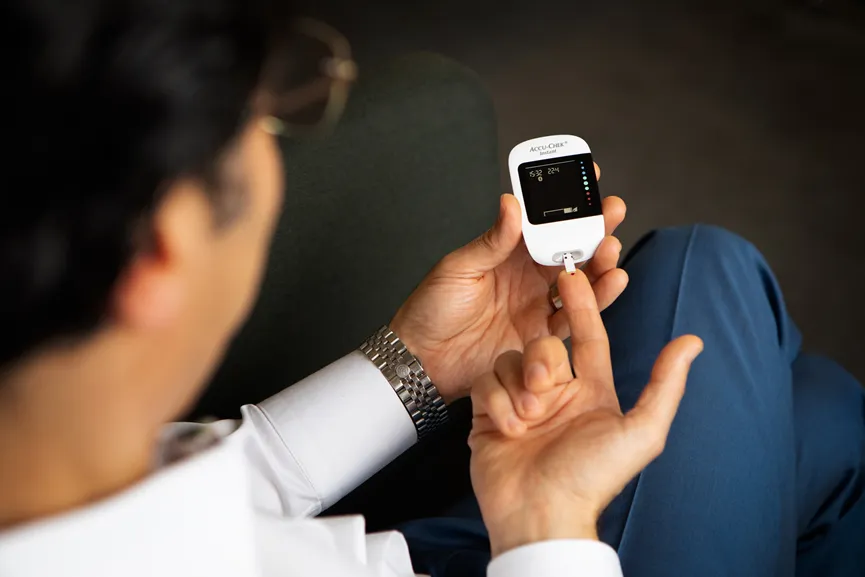
P-glucose is a blood test most often taken by a finger prick and shows your blood sugar level at the time of sampling. With a blood test that measures HbA1c, the doctor can also see what your average blood sugar has been over the past two to three months, which is sometimes called a long-term blood sugar test. Treatment for type 2 diabetes focuses on lowering blood sugar levels to avoid complications.
Symptoms
Symptoms of type 2 diabetes include, for example, tiredness, lack of energy, increased thirst, frequent urination, blurred vision and/or itching in the genital area. They usually come on slowly and can sometimes be difficult to notice.
Cause
The exact cause of type 2 diabetes is not known, but the risk of developing the disease is often hereditary and is largely influenced by lifestyle factors such as being overweight, stress and smoking.
Treatment
The goal of treatment for type 2 diabetes is to lower blood sugar levels in order to avoid complications. This can be done with physical activity and good eating habits, but you will usually also need medication. There are many different medicines for type 2 diabetes. It is also important to prevent and treat high blood pressure and high blood fats, which means that you may sometimes also need medication for this.
Source: 1177
Self-monitoring for type 2 diabetes
Type 2 diabetes can be monitored with the help of remote patient monitoring. Through self-monitoring you can measure your blood sugar when and where it suits you.
You will have access to a Bluetooth-connected blood glucose meter that you pair with a mobile app. When you measure your blood sugar, the values are automatically entered into the app. There you can track the readings over time through graphs and tables. If your blood sugar is abnormal, i.e. too high or too low in relation to the set threshold values, your healthcare provider receives a notification about this and can contact you for any measures.
By detecting blood sugar values that are too high or too low in time and addressing them, the risk of both rapid and long-term complications is reduced. In type 2 diabetes it is also important to prevent and treat high blood pressure and high blood fats, therefore monitoring blood pressure can sometimes also be valuable.
Do you have type 2 diabetes? Check if you can get access to remote patient monitoring here.